The Sydney Hernia Specialists Clinic
Dr Hanh Tran
BA, MA, MB BChir (Cambridge), ECFMG,
MA, PhD (USyd), FRCS (Eng), FRACS
Discover our advanced techniques
Single Incision Laparoscopic Surgery for All abdominal hernias
Expert Surgeon
Personalized Care
Proven Results
Our Hernia Clinic
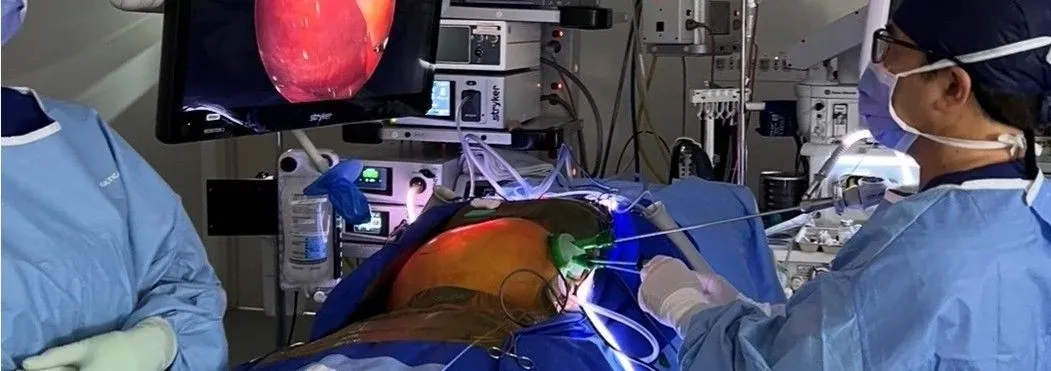
The Sydney Hernia Specialists Clinic is the first hernia clinic in the world to offer key hole hernia repair via a SINGLE small incision for virtually all abdominal hernias irrespective of the number and size. This can result in virtually “scarless” and safer surgery, reduced postoperative pain and quicker resumption of work and physical activities usually within a week (1-5).
Dr Tran, Director of the Sydney Hernia Specialists, is a highly accomplished hernia surgeon specialising in key hole repair of different types of hernias including the groin, abdomen, belly button and stoma. Dr Tran has performed some 6000 keyhole hernia repairs (including inguinal, ventral and parastomal), published over 50 book chapters and research articles and presented his work at over 120 National and International meetings. Through the innovative and exemplary care of his patients, Dr Tran was awarded the Doctor of Philosophy and the prestigious Peter Bancroft Prize by the University of Sydney for his thesis entitled "Advances in Minimally Invasive Hernia Surgery".
Dr Tran has made significant contributions to the publication of the first “International Guidelines for Inguinal Hernia Management” published in 2018 (6) and subsequent “Updates of the International inguinal hernia guidelines” in 2023 (7) which will help the 20 million patients worldwide who undergo hernia treatment annually. In recognition of his extensive contributions to the advancement of hernia treatment Dr Tran has been appointed as an Editorial Board Member of the Journal of Abdominal Wall Surgery and a Member of the International Advisory Board of the Hernia Journal and the International Journal of Abdominal Wall and Hernia Surgery. Read more about Dr Tran at "Our Surgeon".
Dr Tran, Director of the Sydney Hernia Specialists, is a highly accomplished hernia surgeon specialising in key hole repair of different types of hernias including the groin, abdomen, belly button and stoma. Dr Tran has performed some 6000 keyhole hernia repairs (including inguinal, ventral and parastomal), published over 50 book chapters and research articles and presented his work at over 120 National and International meetings. Through the innovative and exemplary care of his patients, Dr Tran was awarded the Doctor of Philosophy and the prestigious Peter Bancroft Prize by the University of Sydney for his thesis entitled "Advances in Minimally Invasive Hernia Surgery".
Dr Tran has made significant contributions to the publication of the first “International Guidelines for Inguinal Hernia Management” published in 2018 (6) and subsequent “Updates of the International inguinal hernia guidelines” in 2023 (7) which will help the 20 million patients worldwide who undergo hernia treatment annually. In recognition of his extensive contributions to the advancement of hernia treatment Dr Tran has been appointed as an Editorial Board Member of the Journal of Abdominal Wall Surgery and a Member of the International Advisory Board of the Hernia Journal and the International Journal of Abdominal Wall and Hernia Surgery. Read more about Dr Tran at "Our Surgeon".
Laparoscopic inguinal hernia repair
There are currently some 30,000 groin hernias being repaired in Australia annually. The International Guidelines for the Management of Adult Groin Hernias (6,7), of which Dr Tran is a co-author, recommend the laparoscopic repair as a first choice for men and women with inguinal hernias due to reduced post-operative pain, both acute and chronic, and early return to work or normal physical activities and, in expert hands, excellent success rates.
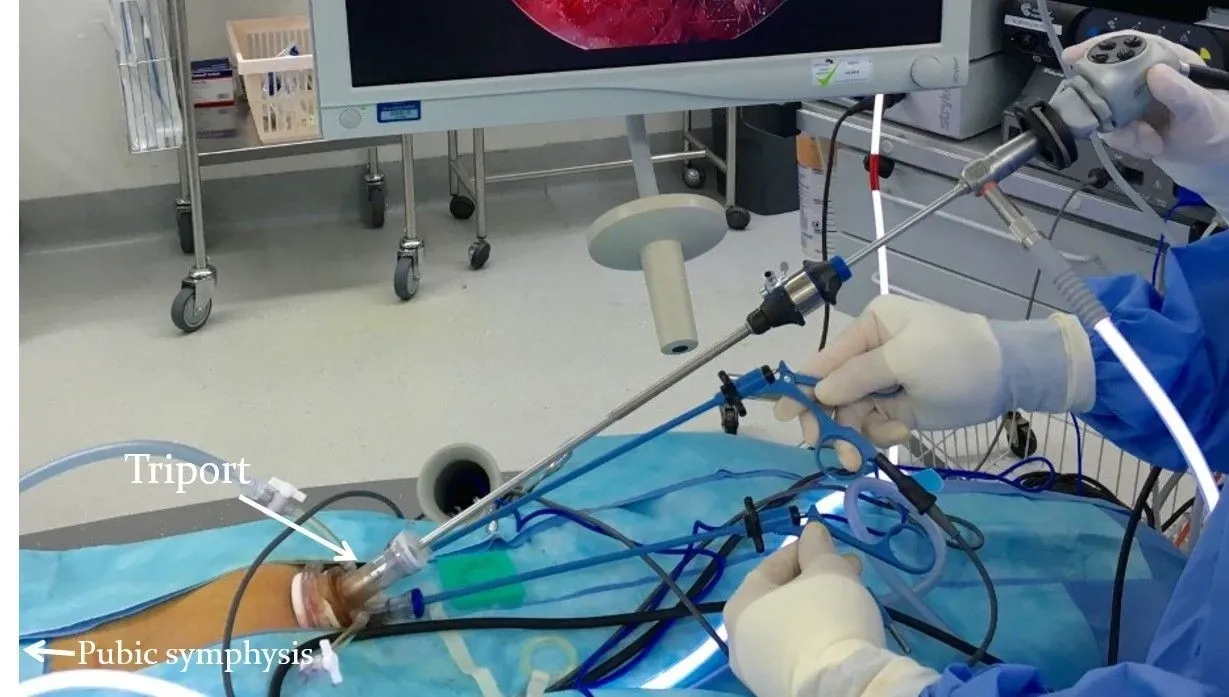
ProcedureConventional laparoscopic repair involves 3 separate incisions. However, the operation can now be performed with a tiny SINGLE (almost invisible) incision under the umbilicus. Our world-first prospective randomized controlled study, using purpose-designed single-port devices, demonstrated that, compared to conventional multiport, single-incision laparoscopic inguinal hernia repair showed statistically significant reduction in post-operative pain, reduced analgesic requirements, earlier return to work and improved cosmesis (1). In fact, via the same tiny incision, umbilical and spigelian hernias (2-5) can be repaired at the same time. Recent innovations include the use of lighter weight with large pore mesh and tissue glue fixation to minimize chronic pain. The recurrence rate has been shown to be less than 1%. Patients can usually return to normal physical activities within a week.
Single incision laparoscopic inguinal hernia repair
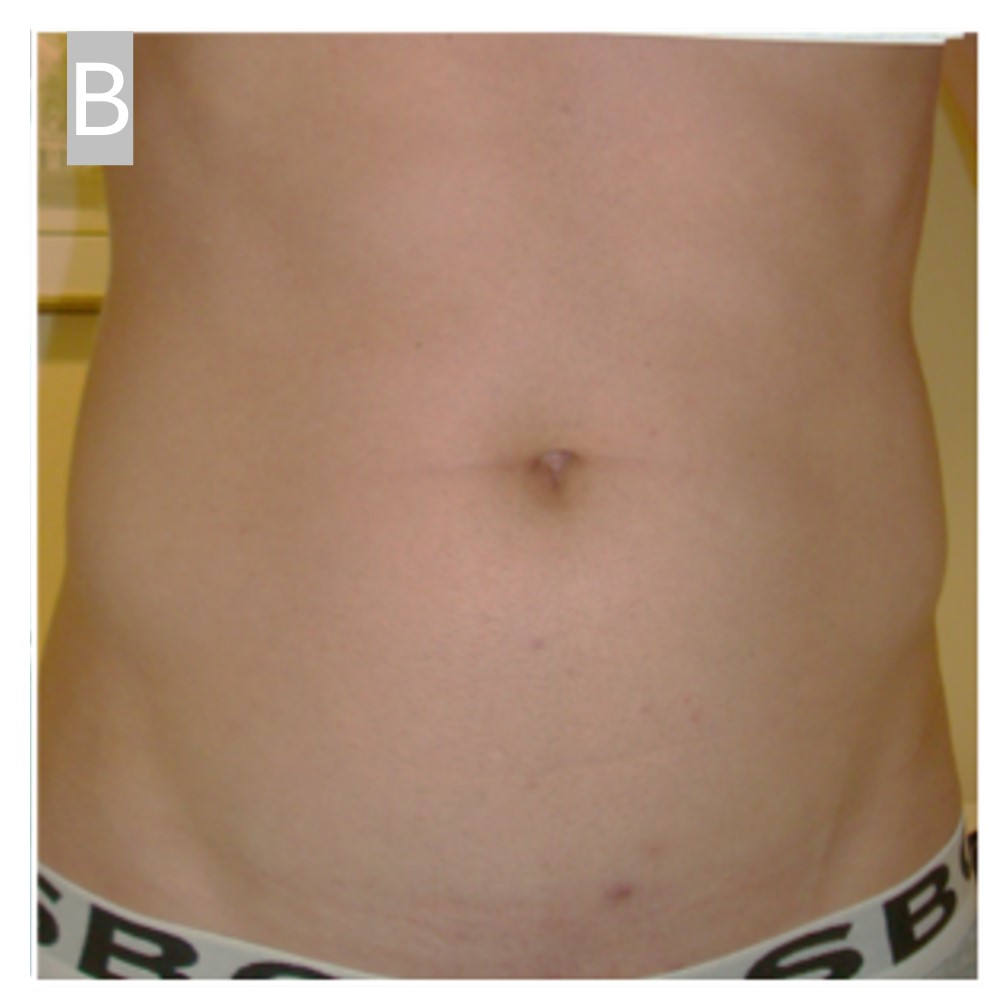
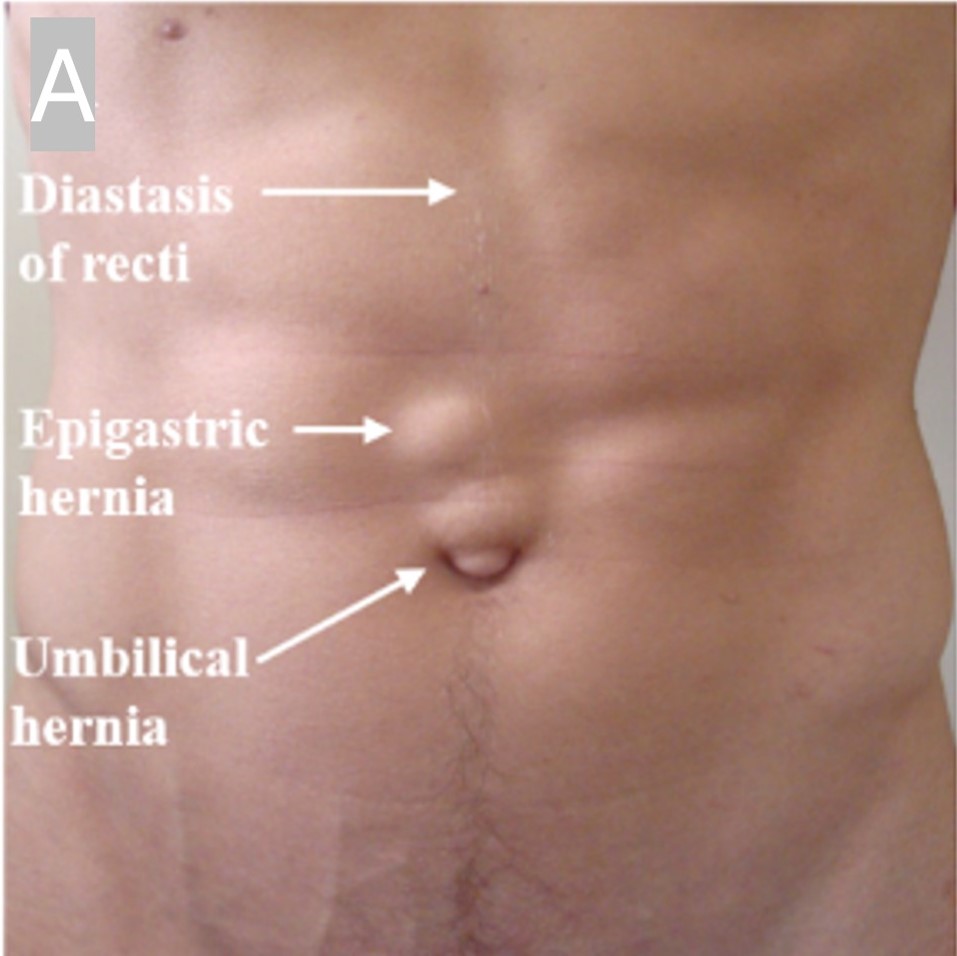
Patient undergoing single inicision key hole repair of right inguinal/spigelian and umbilical hernia (A) all with a tiny and almost invincible umbilical scar (B)
Laparoscopic Ventral/abdominal hernia repair
There are large numbers of laparotomies performed in Australia annually, and with up to 30% of these patients eventually developing incisional hernias, the economic costs are huge. The recurrence rate for conventional open repair is over 50% complications include devastating mesh infection. There is now strong evidence that the laparoscopic ventral hernia repair has the lowest recurrence rate of less than 5% in addition to greatly reduced complications and earlier return to normal physical activities. While conventional laparoscopies involve at least 3 separate incisions, Dr Tran has been performing single incision laparoscopic surgery for virtually all abdominal hernias irrespective of number and size of the hernias. Clinical research at the Sydney Hernia Specialists Clinic has resulted in effective strategies to improve success rates, minimize adhesions by using tissue glue, abolish seroma formation by closing the hernia defects laparoscopically and quicken recovery using minimal access surgery via a single small incision for virtually all abdominal hernias however complex (8-11).
Single incision key hole ventral/abdominal hernia repair
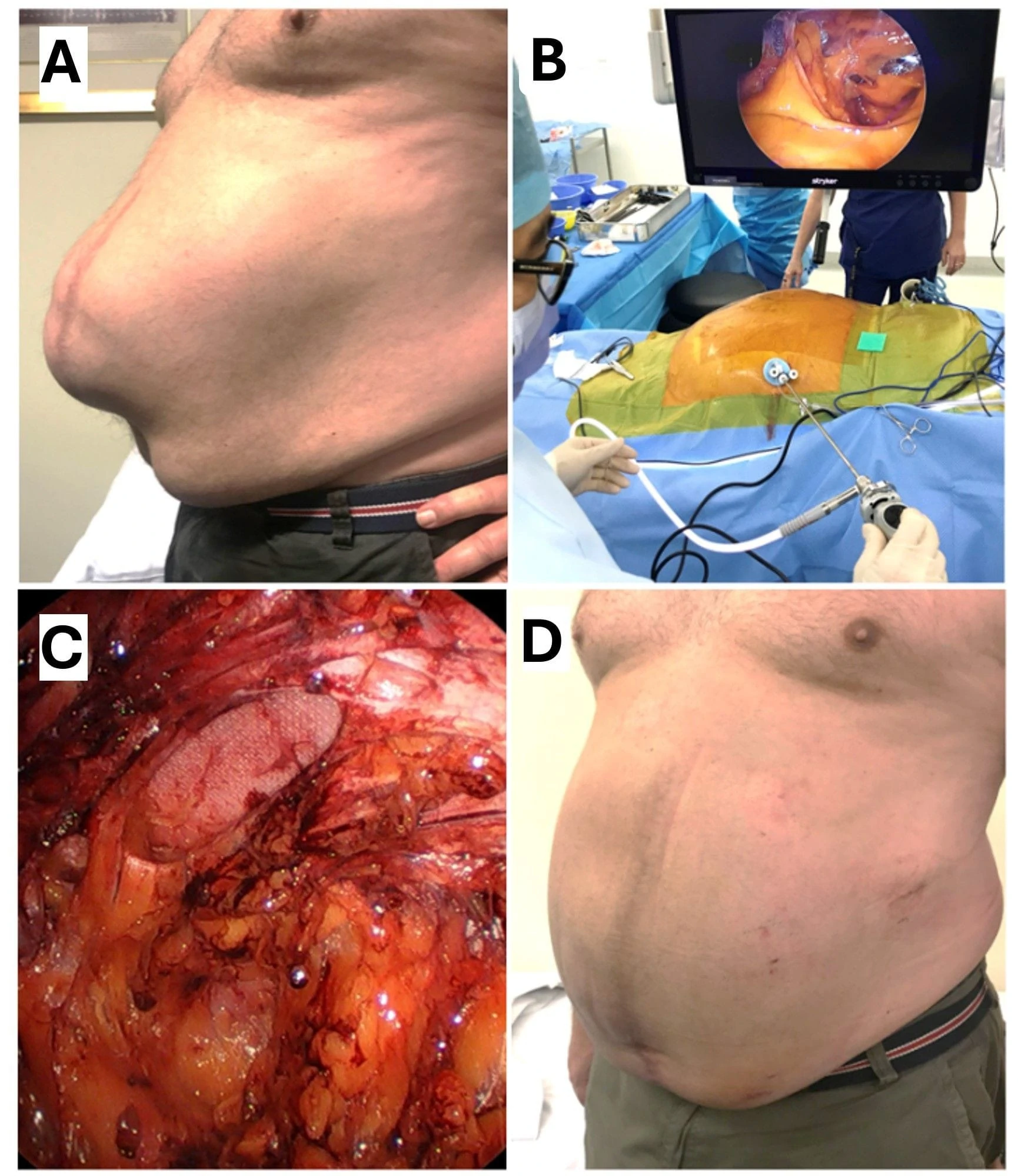
Patient with a very large abdominal incisional hernia undergoing successful single incision laparoscopic hernia repair (A pre-op, B single incision set up, C multiple incisional hernias with previously placed mesh on outside visible and D post-op)
Laparoscopic repair of rectus diastasis (separation of rectus muscles)
Significant separation of the recti, commonly after large pregnancies and with advancing age, with or without umbilical hernia, can now be repaired by key hole surgery with excellent result using single-incision laparoscopic surgery (12).
Single incision key hole repair of rectus muscle separation with abdominal hernias
Patient undergoing single incision laparoscopic repair of diastasis of the recti, ventral and umbilical hernia repair
"Scarless" Single incision laparoscopic repair of multiple abdominal hernias and rectus muscle separation
A young and scar conscious patient undergoing laparoscopic repair of multiple abdominal hernias and rectus diastasis with a supra-pubic incision below the "bikini line" resulting in "invisible" scar
Umbilical Hernia Repair
This is the third most common hernia with over 6,500 umbilical hernias repaired annually in Australia. The conventional open mesh repair (with the mesh being placed on top of the muscle layers) has a recurrence of up to 30%, in addition to complications including mesh infection and seroma formation. The new minimally invasive repair, with a tiny infra-umbilical incision, involves the use of a non-adhesive mesh being placed intra-abdominally. Dr Tran invented the technique (nearly 20 years ago) of placing the mesh behind the muscle layers but outside the abdominal cavity, so-called extra-peritoneal space, to abolish adhesions while reducing wound complications with a small virtually invincible incision within the belly button (13). This allows patients to return to normal physical activities within a week.
Patient undergoing unrelated laparoscopy showing previously placed extraperitoneal umbilical hernia mesh without any adhesions
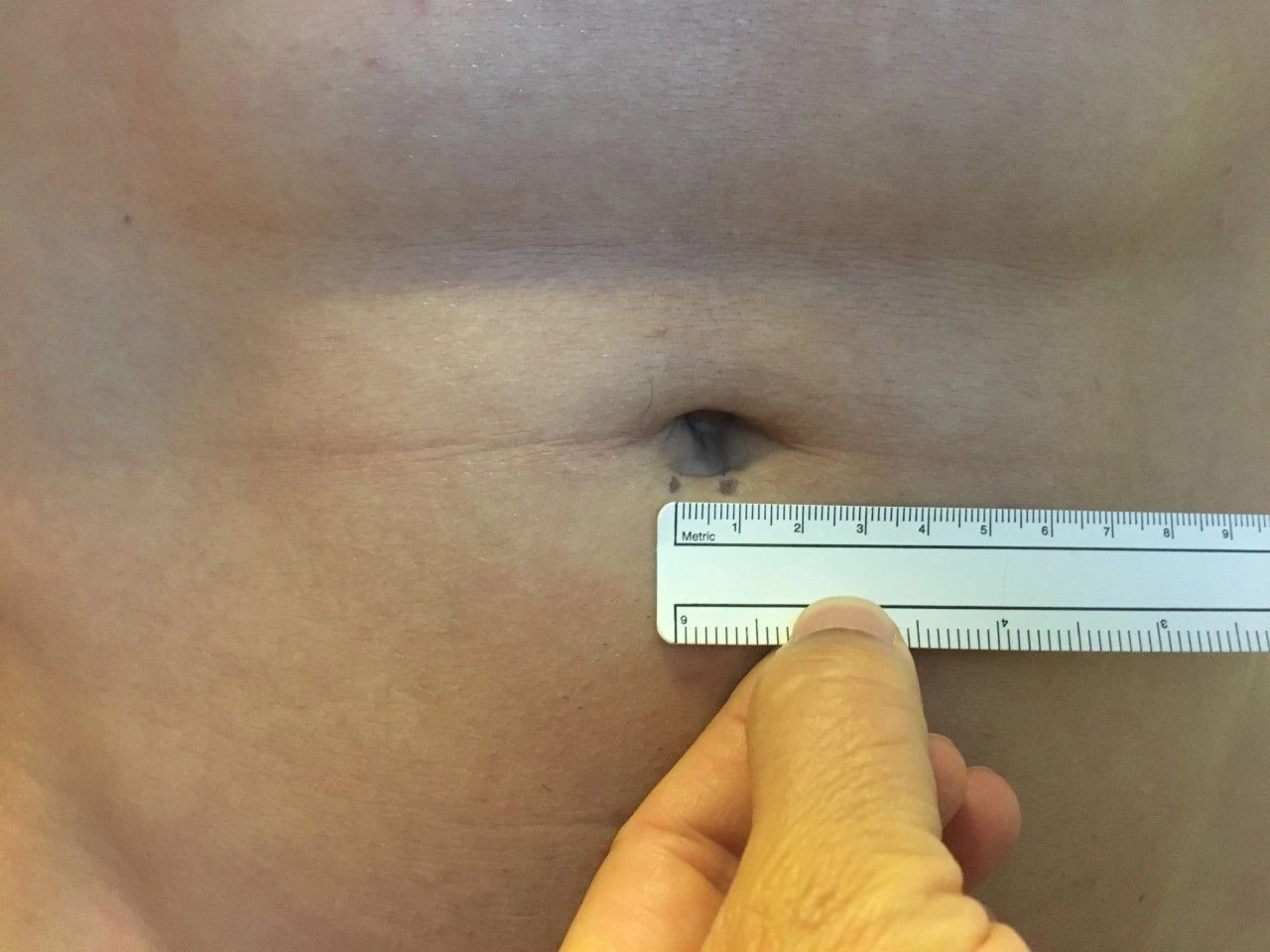
Tiny, almost invisible, incision after umbilical hernia repair
Parastomal Hernias
During the creation of a stoma, the bowel is brought out through an artificially created split in the muscles of the abdominal wall. This is a balancing act between creating too tight a hole, which will result in impaired blood supply to the stoma, or too large a hole, so that the bowel will prolapse through the defect straight away. the latter explains how parastomal hernias occur, as with time, the hole through which the stoma goes through will enlarge and this will lead to a parastomal hernia. Indeed when patients with stomas are followed up long term, the vast majority will develop hernias.
Like all hernias, once a stoma hernia develops it will get progressively bigger and a significant number will require surgical correction.
Conventional Parastomal Hernia Repair
This involves the use of a slit mesh to allow the stoma to come through onto the skin. The mesh can be placed on the outside of the muscle, so-called onlay mesh repair, or under the muscle, so-called underlay mesh repair. Both of these suffer from one major flaw in that a hole is made in the mesh to allow the stoma through and with time the hole with enlarge causing a recurrence of the stoma hernia. Again these operations involve a major laparotomy with attendant risks of infection, incisional hernia and the patients are in hospital for many days.
Ultra Modern Parastomal Hernia Repair
The Sugarbaker stoma repair: In 1980, Sugarbaker recognized that the use of the slit mesh would cause recurrence via the slit, designed an operation where he placed broad piece of mesh over the stoma on the inside and then lateralize the limb of the stoma to lie against the lateral abdominal wall in a tunnel using the same mesh. He reported great success with this procedure which has since been replicated. However, this procedure involves a major laparotomy incision which entails significant risks enumerated above. At our clinic, Dr Tran was the first in the world (in 2010) to successfully perform this operation with single-incision laparoscopic surgery (11).
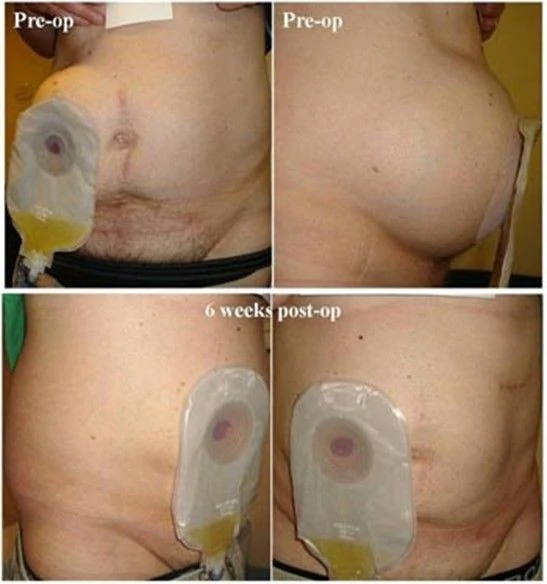
Patient undergoing single incision laparoscopic repair of a large parastomal hernia (A) with modified Sugarbaker technique (B-D).
Before and after photos of patient with large parastomal herniaafter formation of stoma for urinary bladder removal for cancer
Treatment of Chronic Pain after Open groin hernia surgery
The use of nerve blocks and pain medications has been shown to be ineffective in patients suffering from severe chronic pain after conventional open inguinal repair. The new combined laparoscopic and open anterior approach (extra-peritoneal placement of a soft mesh, removal of the old external mesh and tri-neurectomy) has been shown to virtually abolish such debilitating post-herniorraphy chronic pain (14). This is a highly complex and specialized area of surgery and patients are advised to seek the help of a specialist hernia surgeon. Prevention is better than cure and research consistently shows that the best results for hernia repair are in the hands of expert hernia surgeons.
Treatment of chronic pain after open hernia surgery
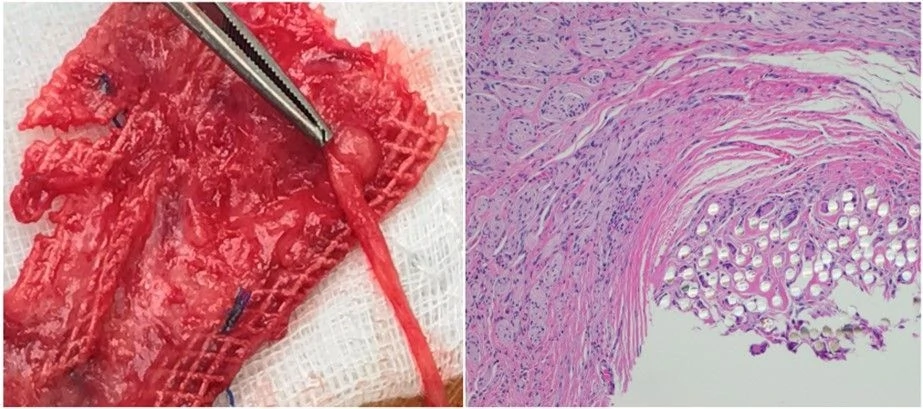
Patient with severe chronic groin pain after open anterior mesh repair undergoing mesh excision showing a neuroma of the ilio-inguinal nerve confirmed on histology
Our Surgeon
Dr Tran is the Founding President of the Australasian Hernia Society and is a regular invited speaker to the annual congresses of the European, American and Asia Pacific Hernia Societies. He is committed to the advancement of hernia management by adjudicating on submitted articles for publication in many hernia journals including the Hernia Journal, Journal of Abdominal Wall Surgery, Journal of Robotic Surgery and the British Journal of Surgery.
Dr Tran is a pioneer in hernia repair and has achieved many world and Australian firsts in hernia surgery including:1. The first surgeon in the world to perform robotic Freehand® single incision laparoscopic total extraperitoneal inguinal hernia repair using standard dissecting instruments;2. The first surgeon in the world to perform robotic Freehand® single incision laparoscopic ventral incisional hernia repair using standard dissecting instruments;3. The first in the world to perform single incision laparoscopic parastomal hernia repair with modified Sugarbaker technique using standard instruments;4. The first in the world to perform single incision laparoscopic ventral hernia repair with a suprapubic incision resulting in an “invisible” scar. This is especially important in young patients who do not want a visible abdominal scar.5. The first in the world to routinely repair the belly button hernia using a tiny incision where a special mesh is placed behind the muscles but outside of the abdominal cavity. He has shown this repair to be highly successful and virtually abolished complications such as adhesions. Patients can usually return to full physical activities after one week compared to a month for other conventional repairs;6. The first in Australia to perform laparoscopic intraperitoneal onlay mesh repair for multiply recurrent groin hernias after conventional open and key hole repair by placing a non-sticky mesh inside the abdomen;7. The first in Australia to use the glue spray to stick the mesh in place to minimize the use of staples which can impinge on nerves causing pain after hernia repair;8. The first in Australia to describe the key hole repair of difficult lower abdominal wall hernias using a special non-sticky mesh which ensures high success rates, reduce complications and quicken recovery to full physical activities;9. The first in Australia to describe the surgical treatment of hernia recurrence and chronic pain after conventional groin hernia repair using the combined key hole approach to repair the hernia and the open approach to cure debilitating nerve related pain;10. The first in Australia to offer key hole repair of both groin hernias through a single small incision under the belly button;11. The first in Australia to successfully perform laparoscopic parastomal hernia repair with a modified Sugarbaker technique.
References
1. Single incision laparoscopic inguinal herniorraphy with telescopic extraperitoneal dissection: technical aspects and potential benefits. Tran HM et al. The World Journal of Hernia and Abdominal Wall Surgery. 2015;19:407-16. 2. Robotic single-port hernia surgery. Tran HM. JSLS. 2011;15:309-314.3. Potential benefits of single-port compared to multiport laparoscopic inguinal herniorraphy: a prospective randomized controlled study. Tran HM et al. The World Journal of Hernia and Abdominal Wall Surgery. 2014;18:731-744.4. Single-port repair of spigelian hernia. Tran HM et al. JSLS. 2015;19:e2014.00212. doi: 10.4293/JSLS.2014.00212.5. Systematic review and guidelines for management of scrotal inguinal hernias. Tran HM et al. Journal of Abdominal Wall Surgery. 2023 Mar 27; 2:11195. doi: 10.3389/jaws.2023.11195.6. International guidelines for the management of adult groin hernias. Simons M,… Tran HM,… Miserez M. The World Journal of Hernia and Abdominal Wall Surgery. 2018 Feb;22(1):1-165. doi: 10:1007/s10029-017-1668-x.7. Update of the International HerniaSurge Guidelines for groin hernia management. Stabilini C,… Tran HM,…. Simons MP. British Journal of Surgery Open, 2023 Sep 5;7(5):zrad080. doi 10.1093/bjsopen/zrad080.8. A prospective study of laparoscopic ventral/incisional hernia repair with Gortex Dualmesh: Hernia defect closure abolishes seroma formation. Tran HM et al. ANZ Journal of Surgery: A52, 2008.9. Demonstrated safety and efficacy of laparo-endoscopic single-site surgery for ventral hernia repair. Tran HM. JSLS. 2012;6(2):242-9.10. Single-incision laparoscopic ventral hernia repair with a virtually scarless suprapubic incision. Tran HM et al. JSLS. 2013;17(2):316-321.11. Single-port laparoscopic parastomal hernia repair with modified Sugarbaker technique. Tran HM et al. JSLS. 2014;18:34-40.12. Single-port repair of diastasis of recti and umbilical hernia combined with abdominoplasty. Tran HM et al. JSLS. 2014;e2014.00213.13. Umbilical hernia repair: Observational, Experimental and clinical studies demonstrating of superiority of extraperitoneal mesh placement. Tran HM et al. The World Journal of Hernia and Abdominal Wall Surgery. 2010;15(1):S89.14. Combined laparoscopic and open anterior approach in the treatment of post-herniorrhaphy chronic groin pain: A Demonstration of its safety and efficacy. Tran HM et al. ANZ Journal of Surgery. 2008:A96.
Disclaimer
The outcomes shown are only relevant for these patients and do not necessarily reflect the results other patients may experience, as results may vary due to many factors, including the individual’s genetics, diet and exercise. Some images may have identifiable items blurred to protect patient identities.
Exemplary Care
In our practice the vast majority of hernias, irrespective of size and number, can be performed with one small, almost invincible, incision and usually as day cases with proven advantages:
- Individualized treatment
- High success rates
- Early return to work/exercise
- Reduced pain
- Virtually scarless
Schedule your consultation: 02 9221 1043